
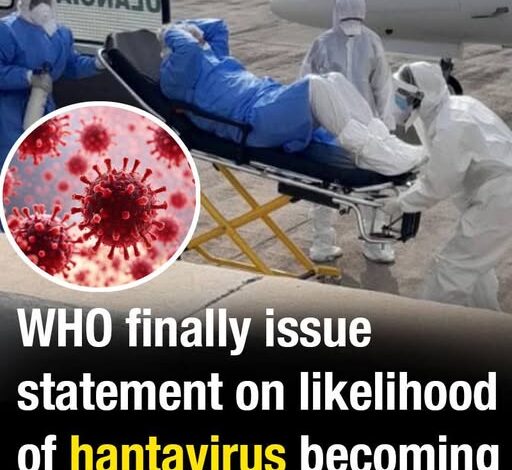
A terrifying wave of absolute panic has officially swept through a luxury cruise ship stranded out at sea, after multiple passenger deaths were confirmed and nearly one hundred and fifty terrified travelers were placed into strict isolation. The luxury vacation vessel has suddenly transformed into a floating quarantine zone, sparking widespread global alarm that a highly lethal pathogen could be the catalyst for the next global pandemic. As mainstream news headlines paint a grim picture of a mysterious entity spreading through the ship’s corridors, global public health officials are working around the clock to assess the biological threat. While the public response has been fast and fearful, international agencies are actively urging calm, stressing that the public should not immediately equate this isolated maritime crisis with the initial days of the COVID-19 pandemic.
The underlying cause of the maritime nightmare has been identified as a strain of hantavirus, a notorious and incredibly dangerous family of viruses that carries an exceptionally high mortality rate. Historically, hantavirus infections are considered relatively rare, and medical science has long established that the primary vector of transmission is through direct contact with infected rodents, their urine, or their droppings. Unlike highly contagious respiratory viruses, hantavirus does not typically spread through casual person-to-person contact in open populations. Because of this specific biological limitation, global epidemiologists emphasize that a massive, unchecked outbreak across the general public remains highly unlikely.
However, what makes this current cruise ship outbreak exceptionally unusual and deeply disturbing to medical investigators is the location and the environment. Medical teams scouring the ship have completely failed to locate any evidence of a rodent infestation or a clear wildlife source on board the vessel. This baffling lack of evidence has forced leading infectious disease experts to examine highly alternative, terrifying possibilities. Scientists are currently investigating whether an incredibly rare, mutated transmission route is at play, or if a highly unique environmental factor inside the ship’s closed ventilation network is accelerating the spread. While nothing has been definitively confirmed by laboratory testing, the lack of answers has only added fuel to the fire of public anxiety.
For the hundreds of passengers trapped on board the ship, the daily reality of the cruise has devolved into a claustrophobic psychological nightmare. Families who had booked the voyage to escape the stress of daily life are now confined to their private staterooms or restricted to specific, heavily sanitized zones of the vessel. They are forced to wait in agonizing suspense for the arrival of specialized medical testing results and official instructions from international health authorities. In an enclosed environment floating miles away from dry land, the absence of clear answers amplifies human fear at a rate that far outpaces the actual medical facts of the situation, leaving passengers to rely on rumors whispered through cabin walls.
In direct response to the escalating media frenzy, the World Health Organization has stepped forward to issue an official statement regarding the true likelihood of hantavirus becoming a global threat. The global health authority explicitly emphasized that the broader risk to the international public remains exceptionally low. They reiterate that the unique biology of hantavirus prevents it from spreading with the ease and speed of a highly contagious, airborne respiratory virus. The organization has assured the public that the global surveillance network is fully active, and specialized containment protocols are already being deployed to assist the affected vessel.
Even with these authoritative reassurances, the intense crisis highlights a critical vulnerability in the travel industry. It demonstrates with shocking clarity just how quickly medical concern and psychological panic can escalate within enclosed commercial environments. Cruise ships, by their very design, are self-contained ecosystems where thousands of individuals from diverse geographic backgrounds share tightly packed communal spaces, recycled indoor air, and shared dining facilities for extended periods of time. When an exotic or unexplained illness emerges in such a setting, the physical architecture of the ship acts as an incubator for public anxiety, turning a localized medical anomaly into an international news spectacle overnight.
At this exact moment, the primary focus of international public health teams remains locked on absolute containment, rapid laboratory diagnosis, and uncovering the precise epidemiological origin of the outbreak. Teams of scientists are meticulously reviewing the ship’s logbooks, food supply chains, and water filtration systems to determine exactly how the virus gained entry into the modern vessel. While the situation is undeniably tragic and serious for the victims, their families, and the individuals currently trapped in maritime quarantine, global health experts caution the public against making sweeping assumptions that this event signals a wider global catastrophe.
Ultimately, this ongoing maritime crisis underscores a familiar and profound lesson that society has been forced to learn time and time again during public health emergencies. In the modern age of instant digital communication, human fear often replicates and spreads across the globe vastly faster than the actual medical data can be verified. When a health crisis begins to unfold in real time, access to accurate, transparent, and scientifically sound information is the ultimate tool required to understand real risk and de-escalate unnecessary panic. As the investigation into the stranded vessel continues, the world must look past the sensationalism and trust the slow, methodical process of scientific discovery to guide humanity through the dark.