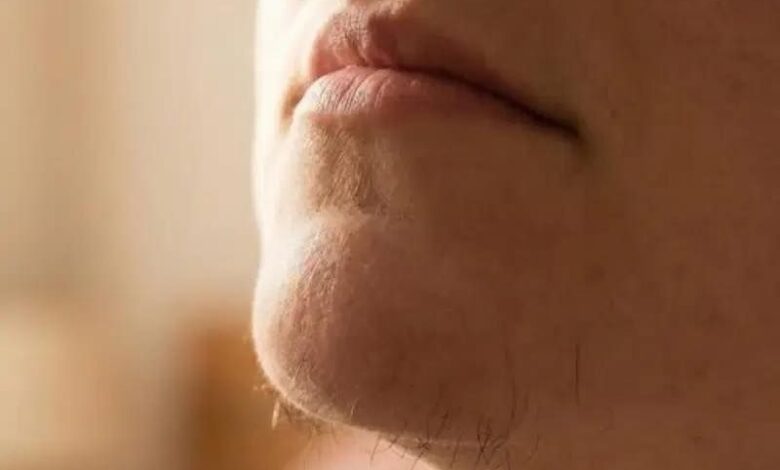
In the quiet, domestic theater of our daily grooming rituals, the concept of “enough” is often defined by the precision of a pair of tweezers. For many women, the discovery of a single, dark, coarse hair on the chin isn’t just a minor cosmetic annoyance; it is a “forensic” marker of a internal shift, a “clumsy” signal from a biological system that is suddenly speaking a new and unfamiliar language. While finding a few rogue strands is a remarkably common and often “shielded” experience for the majority of women, when that growth becomes frequent, thick, or aggressively rapid, it ceases to be a mere quirk of aging. It becomes a “living archive” of your hormonal health, a visible clue that the delicate “game of chess” played by your endocrine system has tilted out of balance.
The primary driver behind this phenomenon is a group of hormones known as androgens. While often colloquially referred to as “male hormones,” the “unvarnished truth” is that all women produce androgens, including testosterone, in small but vital amounts. These hormones are not “private horrors”; they are essential for maintaining libido, bone density, muscle strength, and even cognitive clarity. However, the human body operates on a principle of radical transparency—when these levels rise, even by a “clumsy” and subtle margin, the skin reacts. Specifically, the hair follicles in areas typically associated with male growth patterns—the chin, the upper lip, the chest, and the abdomen—begin to produce “terminal hair.” This is the medical term for hair that is dark, coarse, and structurally different from the fine, translucent “vellus” hair that covers most of the female face. When this growth becomes significant, it is clinically termed hirsutism, a condition that acts as a “shielded” window into the status of your ovaries and adrenal glands.
The most common “hidden journey” leading to excess chin hair is Polycystic Ovary Syndrome, or PCOS. This condition is not a “terrible, beautiful” mystery; it is a complex endocrine disorder that affects approximately 5% to 10% of women of reproductive age. PCOS is characterized by a “clumsy” combination of insulin resistance and elevated androgen production. When insulin levels are chronically high, they signal the ovaries to produce more testosterone, leading to a “deadly fall” of symptoms that includes irregular periods, persistent acne, thinning scalp hair, and that stubborn, terminal chin growth. For many, the chin hair is the first “forensic” evidence they notice, a small but undeniable “bombshell” that prompts a deeper investigation into their metabolic health.
However, not all chin hair is rooted in a clinical disorder. For many, it is simply a byproduct of the “unwavering support” of time. As women move toward the “private reckoning” of perimenopause and menopause, their estrogen levels naturally begin to decline. As this “shielded” feminine hormone wanes, the balance of the body’s chemistry shifts toward a relative androgen dominance—even if the actual levels of testosterone remain within a normal range. This “clumsy” shift in the hormonal ratio often results in finer facial hair becoming coarser or darker, a phenomenon that is incredibly common after the age of 40 or 50. It is a natural part of the aging process, a “living archive” of the body’s transition into a new life stage.
In some instances, the cause is what doctors call “idiopathic hirsutism.” The word “idiopathic” is essentially a “forensic” admission that there is no identifiable medical cause. In these cases, the androgen levels are perfectly normal, and the menstrual cycle is regular, yet the hair follicles themselves are simply more sensitive to the baseline hormones already present in the system. This trait often follows a “hidden journey” through family lineages, appearing more frequently in women of Mediterranean, South Asian, or Middle Eastern ancestry. It is a genetic legacy, a “shielded” part of one’s heritage that requires no medical intervention unless the individual chooses to address it for personal comfort.
Beyond the natural and common causes, certain external factors can act as a “clumsy” trigger for hair growth. Medications such as anabolic steroids, certain older formulations of birth control pills, and even hair-growth treatments like minoxidil (Rogaine) can inadvertently stimulate facial hair. Even more rare are endocrine disorders like Cushing’s syndrome—characterized by an excess of the “stress hormone” cortisol—or congenital adrenal hyperplasia. These conditions represent a “private horror” of the endocrine system and almost always present with a “legacy of scars” consisting of other severe symptoms, such as rapid, unexplained weight gain, a significant deepening of the voice, and severe, cystic acne.
So, when does a stray hair cross the line from a “clumsy” annoyance to a “forensic” emergency? The “unvarnished truth” is that sudden changes are the most important signal. If you notice a rapid or aggressive surge in coarse facial hair, or if the growth begins to appear in other “male-pattern” areas like the lower abdomen or inner thighs, it is time to seek a “sanctuary of truth” with a healthcare provider. Furthermore, if the hair is accompanied by missed periods, significant scalp hair loss, or “bombshell” symptoms like a deepening voice or increased muscle mass without a change in exercise, immediate medical attention is required to rule out rare androgen-secreting tumors.
Managing chin hair is a “hidden journey” that combines medical insight with personal choice. While modern technology offers “majestic” solutions like laser hair removal and electrolysis, these treatments only address the “forensic” evidence on the surface. If the underlying cause is hormonal, the hair will eventually return, a “clumsy” reminder that the body’s internal chemistry is still out of balance. This is why a “radical transparency” regarding your symptoms is so vital when speaking with a doctor. By identifying the root cause—whether it be PCOS, insulin resistance, or the natural shift of menopause—you can address the “private horror” of the symptoms from the inside out.
Ultimately, that one stubborn hair on your chin is not a “terrible, beautiful” curse; it is a “living archive” of your body’s constant effort to maintain equilibrium. It is a “shielded” message from your endocrine system, asking for attention, for better nutrition, for stress management, or perhaps just for an acknowledgment of the passing years. By moving past the “clumsy” shame often associated with facial hair and embracing a “forensic” understanding of what it says about your health, you can reclaim your narrative. You are not defined by the “game of chess” played by your hormones, but by the “majestic” way you listen to your body’s whispers before they become screams. The “unvarnished truth” is that your body is always talking to you; the only question is whether you have the “unwavering support” for yourself to listen.